AI Systems
What Are Claude Skills? A Plain-English Explainer
 5 min read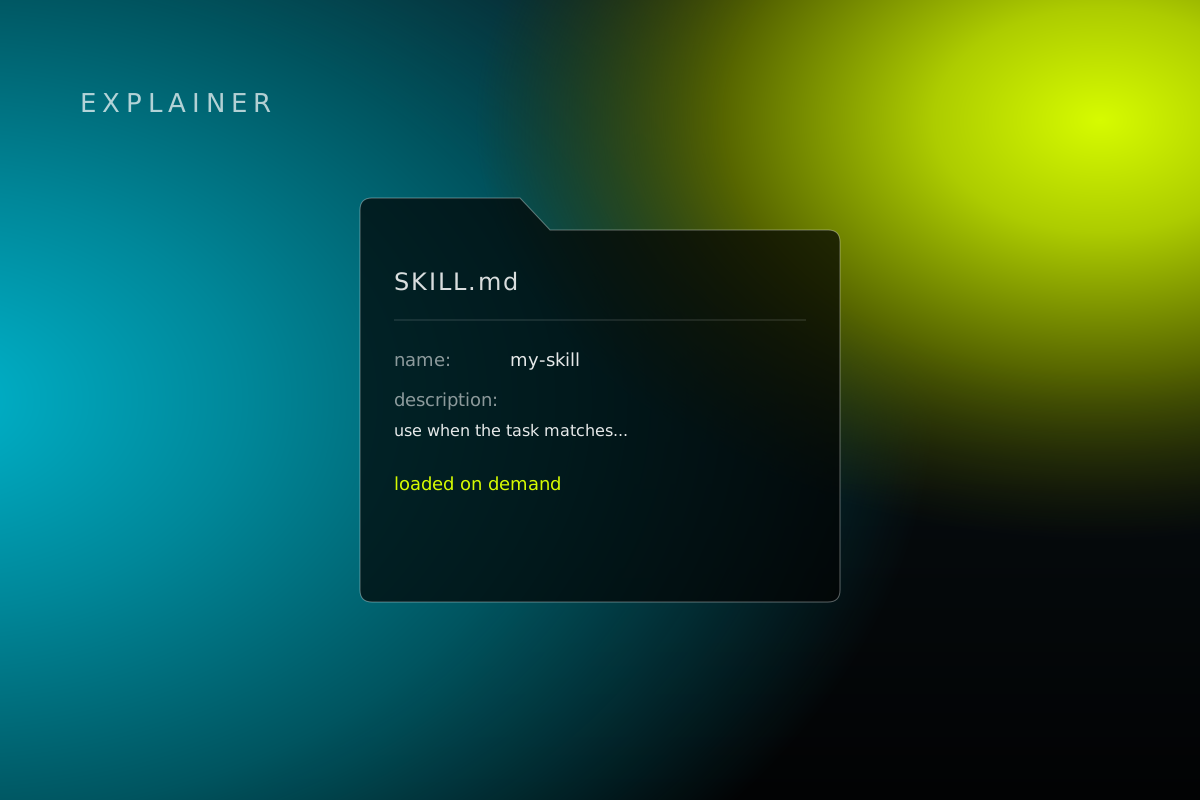
A Claude Skill is a folder.
That's it. That's the whole mystery everyone's making a bigger deal out of than it needs to be.
Anthropic's own description is nearly this short: "Skills are folders that include instructions, scripts, and resources that Claude can load when needed."
Think of it like an onboarding binder for a new hire. You don't hand someone the whole binder and expect them to memorize it on day one. They skim the table of contents, then flip to the one section that matters for the task in front of them. A Skill sits quietly on disk the same way, until Claude decides your request matches it. Only then does anyone actually open the binder.
Works the same across claude.ai, Claude Code, and the API. Write it once, use it everywhere Claude runs.
How a Skill is actually built
One required file: SKILL.md. A small YAML block up top naming the skill and describing what it does, then plain Markdown instructions below.
The name field: 64 characters max, lowercase, hyphens only. No creativity required.
The description field matters more than the name. It's the only thing Claude checks before deciding whether to bother reading the rest. Vague description, skill never fires.
A Skill can also carry extra files in the same folder: a FORMS.md for a specific procedure, a scripts folder for something that needs to actually run. Referenced by name from the main file, not crammed into it.
Why the loading is the clever part
Anthropic calls it progressive disclosure. Three stages:
- At startup, Claude loads only the name and description of every installed Skill. Roughly 100 tokens each.
- Your request matches one, Claude reads the full SKILL.md. Usually under 5,000 tokens.
- Anything that file links out to, reference docs, scripts, only loads if it's actually needed. Scripts run through bash. Only the output comes back, not the code.
That's why you can stack a dozen Skills without torching your context window. Nothing but a name and a one-liner sits there until something calls on it.
In Claude Code, Skills are just files. Drop a folder in .claude/skills/ for the project or ~/.claude/skills/ for yourself. No upload step. Claude finds it. You can also just type /skill-name and skip the guessing.
Why this beats re-explaining yourself every session
Before Skills, you had two options. Re-explain your process every conversation, or paste the same reference doc into every new chat.
Both work. Neither scales. You're spending your context budget re-teaching instead of doing the actual task.
A Skill flips it. Write the procedure once. It's there from then on, loaded only when it's relevant, combined with other Skills when a task needs more than one. Portable expertise instead of a conversation you have to keep having.
Why every other tool copied the format
Anthropic didn't keep this locked up. It published Agent Skills as an open standard, spec and reference SDK at agentskills.io.
That's the part that actually matters. Cursor, GitHub Copilot, VS Code, Gemini CLI, ChatGPT, and Codex all show up in the official adopter list now. A few tools had already been circling the same idea on their own, Cursor's Rules and Copilot's repo instructions file, but they were locked to one tool. The open format isn't.
Same direction, every time: package the expertise once, as a file an agent can find and load. Skills happened to be the version everyone agreed to standardize on.
Where to actually see one
Building on more than one agent, Claude Code for one project, Cursor for another, Copilot inside the IDE, means writing the same instructions three or four different ways. Gets old fast.
Baader keeps a library of skills built to the open format, so one skill moves between Claude Code, Cursor, Codex, Copilot, and Gemini without a rewrite. Worth a browse if you want to see what a well-built one actually looks like instead of taking my word for it.
Want this run for your business?
Most partners start with The Growth Hour.